Funeral Repatriation in South Africa: A Family Guide
Funeral repatriation in South Africa is the organised transport of a deceased person to the town, province or country where the family intends to hold the funeral or burial. It involves more than driving a vehicle: the funeral provider must coordinate identification, mortuary care, legal documents, permits, suitable preparation and safe transport.
If a death has just occurred, contact a registered funeral provider before making transport arrangements. Informal movement of human remains can breach health and border requirements.
Three situations families call repatriation
Local transfer
The deceased is collected from a home, hospital or other location and moved to a mortuary in the same general area.
Interprovincial repatriation
The deceased is transported between towns or provinces, for example from Johannesburg to Polokwane or from Pretoria to a rural burial location in Mpumalanga.
Cross-border repatriation
The deceased is transported from South Africa to another country, or brought into South Africa. This requires coordination with authorities and funeral providers on both sides of the border. Air transport introduces airline and cargo requirements in addition to official permits.
How the process usually works
- The death is formally confirmed and reported.
- The deceased is identified and collected by an authorised provider.
- The family confirms the destination and funeral plan.
- Required death, health, police, consular and transport documents are obtained.
- The deceased is prepared and placed in a compliant coffin or container.
- The receiving funeral home and transport route are confirmed.
- The transfer takes place and custody is documented.
- The exact process changes according to cause of death, infectious-disease considerations, country rules and mode of transport.
Documents that may be required
- Depending on the case, the family and provider may need:
- Death certificate and notice of death
- Burial order or cremation authorisation
- Deceased person’s ID or passport
- Claimant or next-of-kin identification
- Embalming certificate
- Non-infectious-disease or health certificate
- Police clearance or post-mortem records for an unnatural death
- Import or export permit
- Consular authorisation
- Coffin-sealing certificate
- Airline airway bill and cargo documents
South Africa’s regulations on human remains address inland and cross-border transport, import and export authorisation, burial and cremation. When a South African dies abroad, DIRCO’s deaths-abroad guidance is an important starting point for consular support and transport requirements.
Embalming and coffin requirements
Cross-border rules may require embalming and a sealed or lined coffin. Do not buy or seal a coffin before the repatriation provider confirms the destination country’s and carrier’s specifications. A road transfer and an air transfer may have different requirements.
What funeral cover may pay for
Royal Funerals provides repatriation assistance and has a national branch network. However, “repatriation included” must be defined. Ask whether the plan covers:
- Collection and mortuary storage
- Preparation or embalming
- Coffin or zinc lining
- Permits and translations
- Kilometres by road or air-freight charges
- Toll fees and border charges
- Receiving funeral home fees
- Transport for accompanying family members
- Transfer only or the funeral service at destination
- Get all extra charges in writing before authorising transport.
Information to give the funeral provider
Be ready with the deceased person’s full name, ID or passport, location, cause of death if known, current mortuary, destination town and country, desired burial date, policy number and next-of-kin contact. If the deceased was a foreign national, provide immigration and consular details available to the family.
Why early coordination matters
Border permits, public holidays, embassy hours, airline capacity and document errors can affect timing. The family should avoid announcing a final burial date until the repatriation team confirms that the documents and route are feasible.
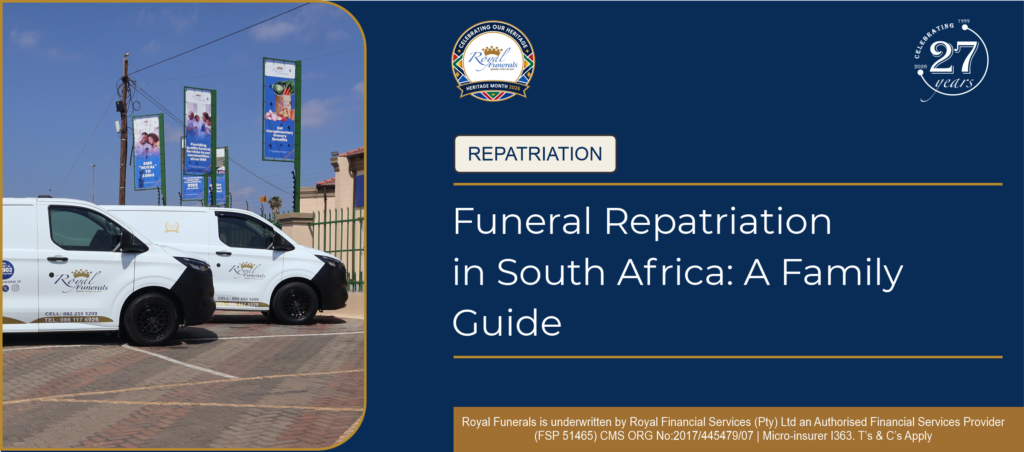
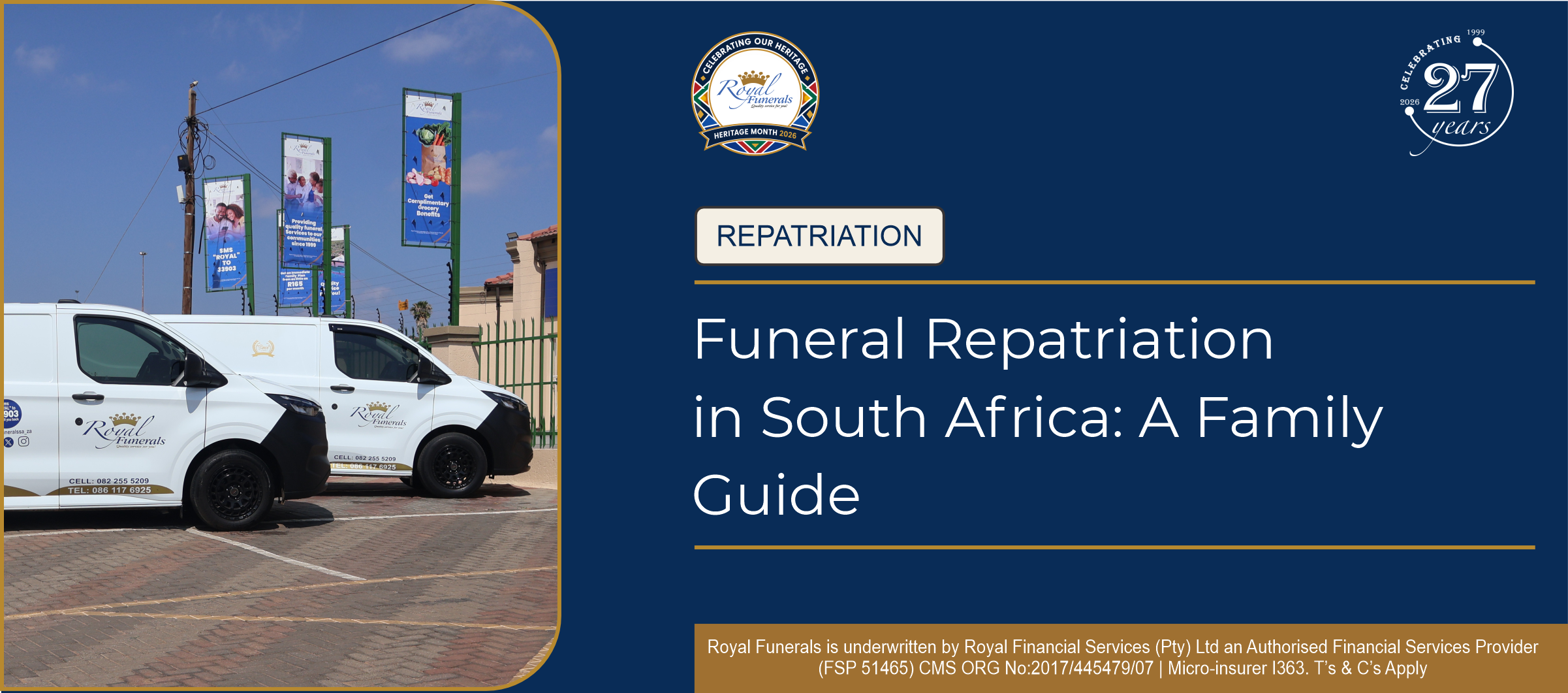
Royal Funerals can assist with nationwide and cross-border support. Call the 24-hour emergency line listed in the supplied material on 082 255 5209, the call centre on 086 117 6925, or review Royal Funerals services. Confirm the emergency number, destination coverage and costs when the case is opened.
Common questions
Is transport between provinces repatriation?
Families commonly use the term that way, although cross-border repatriation has additional legal and consular requirements.
How long does cross-border repatriation take?
There is no fixed period. Cause of death, permits, embassies, translations, route and airline capacity can affect timing.
Can family travel with the deceased?
This depends on the provider, vehicle, route and border rules. Confirm seats, passports, accommodation and additional costs.