Before You Sign: 9 Funeral Cover Questions Every South African Family Should Ask
A plain-language guide to waiting periods, exclusions, covered family members, premiums and claims, without the sales pressure.
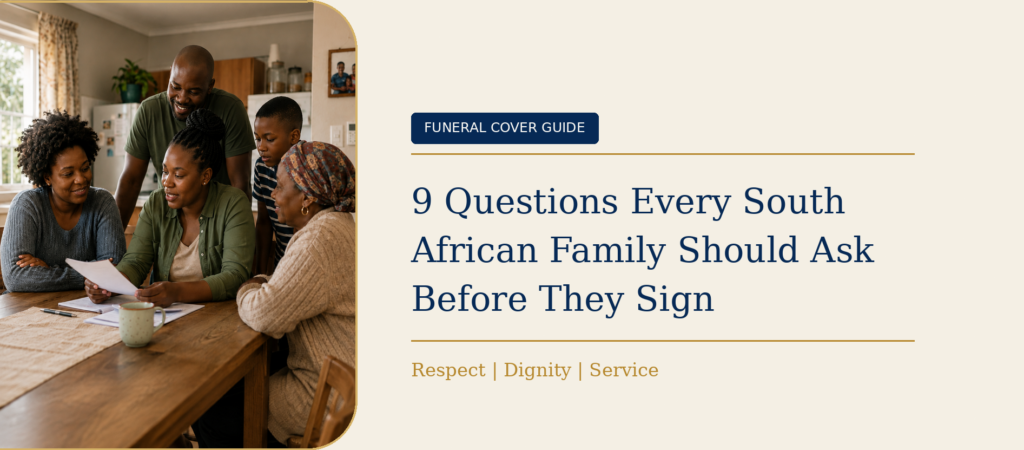
Funeral cover is often bought in a hurry, at a table in a shopping centre, through a phone call or because someone in the family says, “We need something.” The monthly amount may be the first thing people ask about. It should not be the last.
Funeral insurance is one of South Africa’s most widely used financial products. It is also an area where misunderstandings can have painful consequences. Recent complaints reporting highlights recurring disputes about waiting periods, lapses, policy terms, insurable interest and poor communication. The safest time to ask questions is before the family needs to claim.
1. Who underwrites the policy?
Funeral policies must be connected to a properly licensed insurer. Ask for the name of the underwriter and the relevant regulatory information. Keep the policy schedule and do not rely only on a verbal explanation.
2. Exactly who is covered?
Ask for every covered person to be listed correctly. Confirm how the policy defines a spouse, child, parent or extended-family member. Check ages, identity details and any limits that differ between family categories.
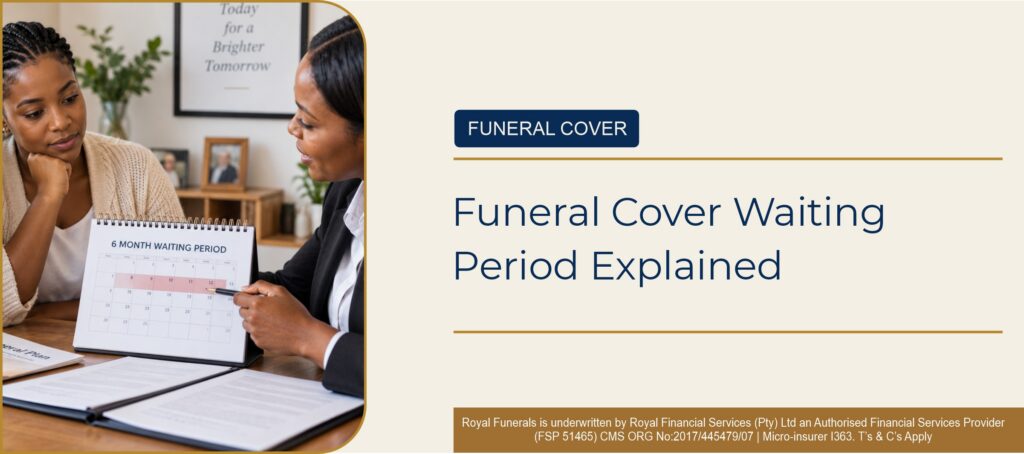
3. What is the waiting period?
A waiting period is the time after cover starts during which certain claims may not be payable. It can differ according to the cause of death and policy terms. Ask when each type of cover becomes active and get the answer in writing.
4. What exclusions apply?
An exclusion describes circumstances in which a benefit may not be paid. Read this section carefully. Ask the adviser to explain unfamiliar wording and record the answer.
5. What happens if a premium is late or missed?
Do not assume a policy will continue unchanged. Ask about the grace period, lapse rules, reinstatement and whether a new waiting period could apply. If your income changes, contact the provider before simply stopping payment.
6. Is the benefit cash, services or a combination?
Families sometimes assume all funeral products work in the same way. Confirm what is actually provided, who receives it and whether any part is limited to specified services.
7. What documents will the family need to claim?
Royal Funerals’ published claims information indicates that documents may include a claim form, death certificate, certified identity documents, banking details and supporting records where applicable. Requirements depend on the circumstances. Keep the current checklist with the policy documents.
8. How and where is a claim submitted?
Ask for the official claims channels, expected communication process and contact details. Families should know how to verify that a claim was received and how to follow up safely.
9. What must I update when my family changes?
Marriage, separation, a new child, the death of a covered person or a change in banking details may affect the information on the policy. Review it at least once a year and after major family changes.
Keep proof, not promises
Keep the application, policy schedule, proof of payment and important correspondence. Never sign a blank form. If something is unclear, ask for a written explanation before agreeing.
The purpose of funeral cover is to reduce pressure during a difficult time. Understanding the policy is part of the protection. A suitable policy is not simply the cheapest one. It is one the family can afford, understand and maintain, with benefits that match its actual needs.
Read the policy terms carefully and contact Royal Funerals through an official channel if you need any part of the cover explained before applying.