Funeral Cover Waiting Periods in South Africa Explained
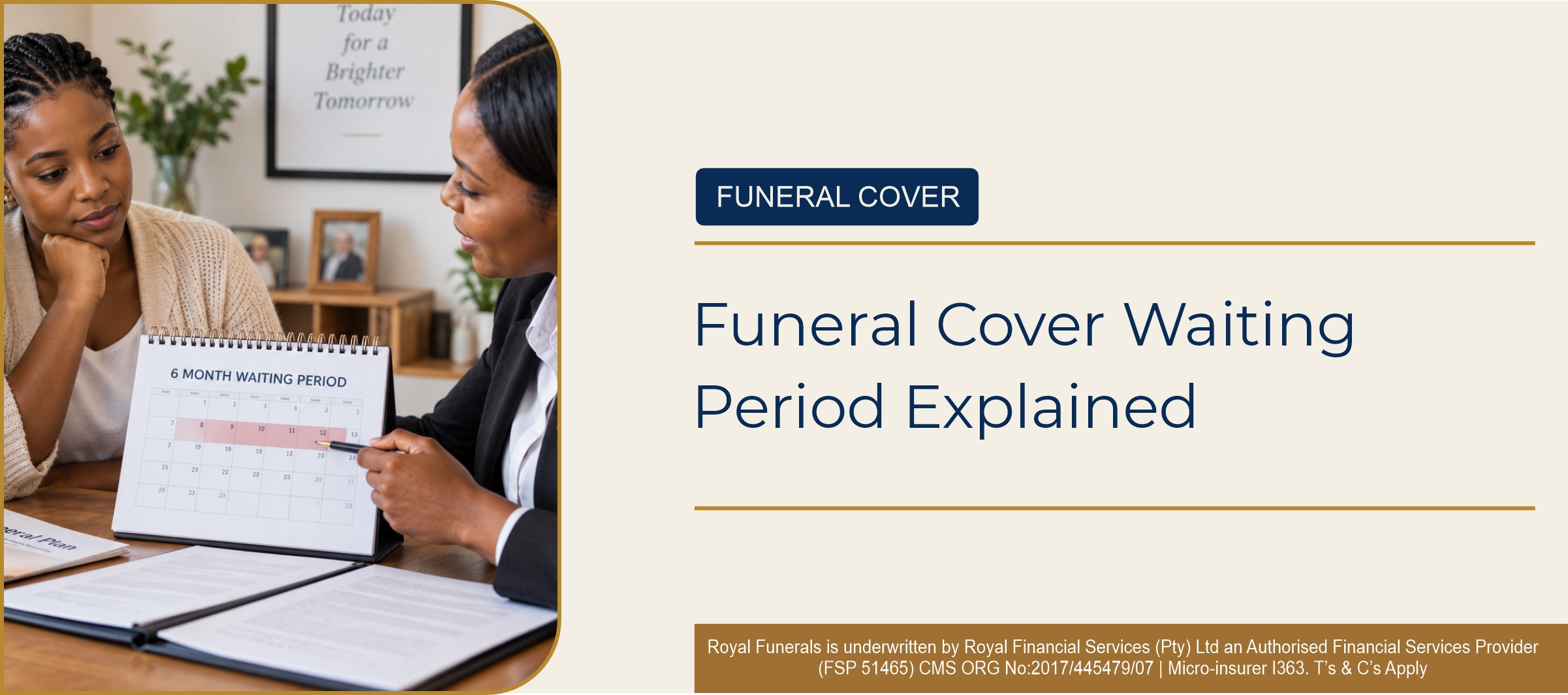
A funeral cover waiting period is the time after a policy begins during which a claim for a specified cause of death may not yet qualify for the full benefit. It is one of the most important sections of a funeral policy because paying the first premium and activating the policy does not always mean that every benefit is immediately claimable.
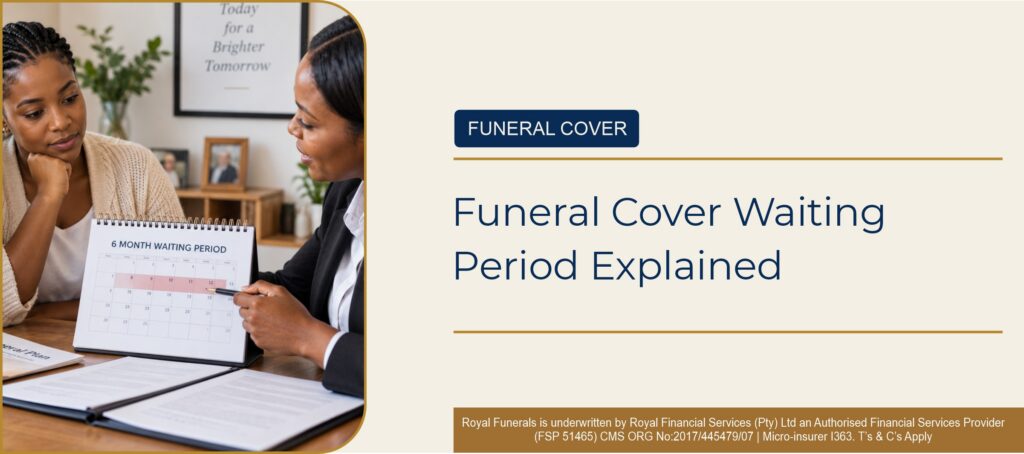
Royal Funerals’ current joining material states that new plans have a six-month waiting period and that the policy activates once the first premium is paid. Those two statements describe different things: activation establishes the policy, while the waiting period affects when specified claims become eligible. The signed policy schedule and terms remain the final authority.
Why funeral policies use waiting periods
Waiting periods protect the insurance pool from people joining only when a death from an existing illness appears imminent. At the same time, policyholders are entitled to clear information about how long the period lasts, which insured people it affects and which causes of death are treated differently.
The FAIS Ombud’s funeral-policy guidance specifically tells consumers to pay attention to waiting periods, age limits, claim processes and exclusions before buying.
The situations you must distinguish
| Situation | What the customer should confirm in writing |
| Natural death | Length of the waiting period and the date it ends |
| Accidental death | Whether a different or no waiting period applies and how accident is defined |
| Suicide | Whether a separate exclusion or longer waiting period applies |
| New family member | Whether a new waiting period begins for that person |
| Switching policies | Whether completed waiting time is recognised and what evidence is required |
| Missed premiums | Grace period, suspension or lapse rules |
| Reinstatement | Whether the unfinished waiting period resumes or a new period applies |
Activation date versus waiting-period end date
Suppose the first premium is received on 1 September and the policy starts on that date. If the policy has a six-month natural-death waiting period, the family should not guess the claimable date. Ask the provider to show the commencement date and waiting-period end date on the policy documents.
Calendar months, policy months and successful premium collections can be treated differently. A verbal explanation is not enough when the dates matter.
What happens when you add someone later?
Adding a parent, spouse, partner or child after the policy starts may create a separate commencement date for that person. The original member may have completed a waiting period while the newly added person has not.
Check the updated policy schedule immediately. Confirm the new person’s name, identity number, relationship, premium, commencement date and waiting-period date.
Switching from another funeral policy
Do not cancel existing cover before the new provider confirms the replacement process in writing. South African policyholder-protection rules can affect whether a new waiting period may be imposed when equivalent funeral cover is replaced, but the protection depends on the facts and required evidence.
Ask both providers for proof of cover, commencement dates, cancellation dates and confirmation that the previous waiting period was completed. If the new policy provides higher or additional benefits, different rules may apply to the added portion.
Missed premiums and lapses
A policy can stop providing cover if premiums are not paid according to its terms. A debit order failure, changed bank account or insufficient funds can therefore become a claim problem later.
Every month:
Check that the premium was collected.
Keep a bank statement, receipt or official payment reference.
Update the provider when banking or contact details change.
Use only verified payment channels.
Ask what grace period applies before the policy lapses.
How waiting periods affect claims
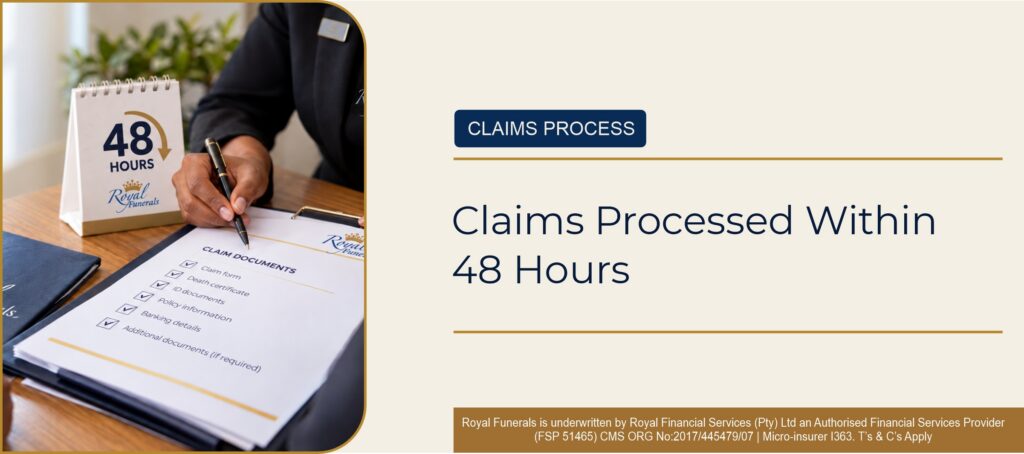
When a death occurs, the provider checks the cause and date of death, the insured person’s commencement date, premium history, policy status and submitted documents. A 48-hour processing statement normally begins only after all required documents have been received and the claim qualifies under the policy.
That is why the family should keep the policy schedule with identity documents and claim contact details. The claim should be reported promptly, but no family should be promised an automatic payment without assessment.
Five questions to ask before signing
- What waiting period applies to natural death, accidental death and suicide?
- When does the period start and end for each insured person?
- What happens if I switch from an equivalent policy?
- What happens after a missed premium or reinstatement?
- Where are these rules written in my policy documents?
For help understanding Royal Funerals’ waiting periods and plan options, call 086 117 6925, WhatsApp 083 476 7479, or review the Royal Funerals terms and conditions. Always rely on the policy wording issued for the selected plan.
Common questions
Does cover start after the first premium?
The policy activates after the first premium, while specified claims can still be subject to a waiting period. Confirm both dates in writing.
Is accidental death treated differently?
Yes, but the definition and evidence requirements are policy-specific. Do not assume immediate cover without reading the terms.
Can a missed premium restart the waiting period?
A missed premium can suspend or lapse cover. Reinstatement and any remaining waiting period depend on the policy rules.
Is there a joining fee?
No joining fee is required, after the first premium paid the policy is activated.
What is the cover age limit?
The maximum entry age for a prospective policy holder is 84 years old, while dependents of a policy holder can be 79 years old or younger