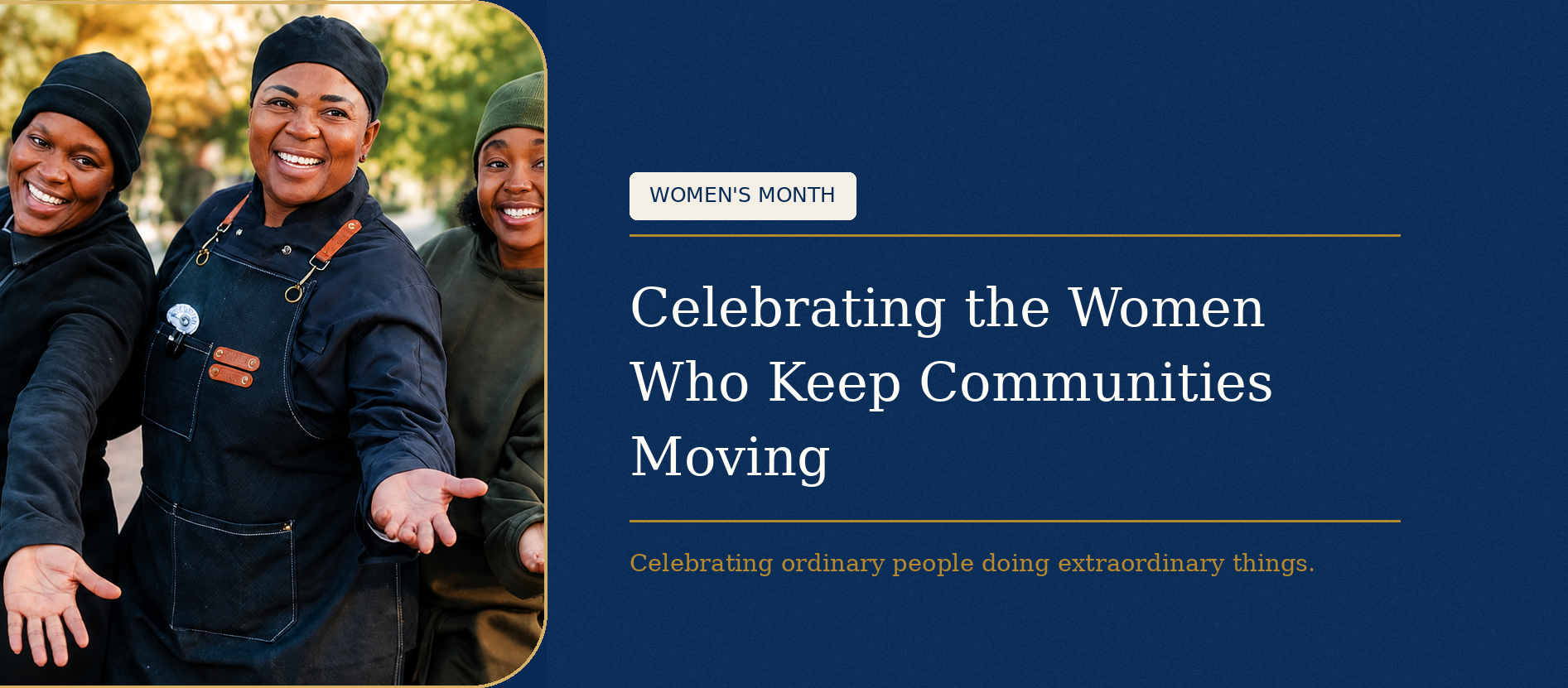
Celebrating Women in South African Communities
This Women’s Month, Royal Funerals celebrates the women whose work, care and determination shape everyday life in South African communities.
Every community has women people know they can call.
She may be the neighbour who checks on an elderly resident, the aunt who helps with school applications or the business owner who opens before sunrise. She may organise the lift club, manage the family WhatsApp group or make sure there is food when someone has fallen on difficult times.
Much of what she does happens quietly. There may be no title, formal position or public recognition attached to it. The people around her still understand the difference she makes.
This Women’s Month, Royal Funerals celebrates these women.
Women’s Month is part of our history
South Africa observed National Women’s Day on 9 August in remembrance of the thousands of women who marched to the Union Buildings in 1956. They stood together against unjust pass laws and showed what organised women could achieve.
Their courage remains an important part of our national history.
Women’s Month also gives us an opportunity to look at the women making a difference now. Their contributions may take a different form, but they continue the work of strengthening families, businesses and communities.
Some lead organisations. Others run small businesses, care for relatives, teach, organise, serve customers or create opportunities where few existed before.
Their work deserves to be noticed.
The work that is easy to overlook
A great deal of community life depends on work that is rarely counted.
It is the grandmother who looks after children while their parents work. It is the woman selling breakfast to commuters in the early morning. It is the teacher who buys extra stationery for a learner. It is the neighbour who accompanies someone to a clinic appointment.
It is also the woman who remembers birthdays, keeps important family documents safe and knows who must be contacted when something goes wrong.
These actions may seem small when considered one at a time. Together, they create the support systems that many families depend on.
Recognising this work does not mean that women should be expected to carry every responsibility. Celebration should never become another way of telling women to cope without help.
It should lead to appreciation, practical support and a fairer sharing of responsibility.
The women building from what they have
Across South Africa, women are creating income in difficult economic conditions.
Some operate established companies. Others trade from their homes, community spaces, pavements or online. They sell food, clothing and household goods. They provide transport, beauty, childcare, cleaning, catering and professional services.
Many began because they needed an income and could not wait for the perfect opportunity. They started with what they had, learned from experience and continued improving as the business grew.
Their businesses provide more than income. They solve everyday problems, bring services closer to customers and keep money moving within local communities.
Behind every small business is a person making decisions, managing costs and trying again when a plan does not work. That effort deserves the same respect we give to businesses that began with more resources.
Strength should not become an expectation
Women are often described as strong. The description may be intended as praise, but it can become a burden when it suggests that a woman must always cope.
A woman can be capable and still need rest.
She can care for her family and still need someone to care for her.
She can manage money responsibly and still feel pressure when the household budget is stretched.
She can support others and still experience grief, uncertainty or exhaustion.
Celebrating women properly means seeing the whole person, not only what she can do for everyone else.
It means asking what support she needs and listening to the answer. It means sharing household and family responsibilities. It means supporting her business, respecting her decisions and giving her space to pursue goals that belong to her.
Recognition should happen now
People are often celebrated after they have reached a major milestone. By then, the years of work that brought them there may have passed without much recognition.
Women should not have to become famous, wealthy or publicly successful before their contribution is valued.
Recognition can happen in ordinary ways.
Buy from the woman running a local business and recommend her when the service is good. Thank the person who consistently helps the family. Ask the woman who usually organises everything what task you can take over. Give credit when an idea, opportunity or project came from her work.
Young women and girls also need to see that achievement has many forms. A meaningful life is not measured by one job title, qualification or public success story. Progress can begin in a classroom, a kitchen, a community project or a small business that is still finding its feet.
A celebration that continues beyond August
Women’s Month should leave something behind after the messages and events have ended.
It should encourage families to share responsibility more fairly. It should encourage communities to support women-owned businesses throughout the year. It should remind organisations to recognise women’s work, listen to their ideas and create genuine opportunities for growth.
Most importantly, it should remind women that their value is not limited to how much they can carry for other people.
To the women who open businesses, lead teams, raise families, support neighbours, care for relatives and keep returning to their dreams, Royal Funerals sees and celebrates you.
Your work matters.
Your story matters.
Your future matters.
Happy Women’s Month.
Visit our Services page to know more about Royal Funerals